In this article
Rescuing a seal, saving a schedule
When a long-standing oil and gas customer reported a sudden increase in sealing component failures, it triggered alarm bells across the ERIKS International team. These weren’t everyday parts.

They were one-metre-wide PTFE anti-extrusion rings – critical back-ups that protect primary O-rings inside subsea wellhead assemblies. In an environment where pressure is relentless and tolerances unforgiving, even a small dimensional deviation can threaten production. That’s exactly what was happening.
A Critical Failure at Depth
For seven years, these PTFE rings performed exactly as intended. Then, within twelve months, failures began to stack up. Inspection revealed gaps between the ring ends that drifted outside tolerance - enough to compromise the primary seal and risk elastomer extrusion when exposed to extreme subsea pressure differentials.
Eight rings had already been scrapped. Replacement costs exceeded £1,400 per unit, but the bigger issue was the time it took. Any delay to offshore installation carried a staggering operational impact, estimated at £1 million per day of lost production.
The situation was complicated by a supply chain built around a single OEM. Communication was slow, lead times stretched to 12 weeks, and crucially, the supplier refused to work to the customer’s updated drawings – continuing instead with a legacy template. ERIKS found itself responsible for components it could neither influence nor control. Confidence in the entire sealing system was fading fast.
A Turning Point in the Specification
The breakthrough came when the customer revised their technical specification, retaining material requirements but removing the mandatory OEM clause. With that barrier lifted, ERIKS could finally explore alternative routes, while remaining fully compliant.
A cross-functional team from ERIKS International and ERIKS Sealing & Polymer reviewed the customer’s updated drawing in detail. The tolerances were tight, the geometry precise, and the certification requirements extensive. But now there was room to act.
ERIKS approached a trusted UK machining partner with proven expertise in large-format PTFE components. Crucially, they agreed to manufacture exactly to the drawing. Lead times also dropped dramatically, from 12 weeks to just five.
Measuring What Matters
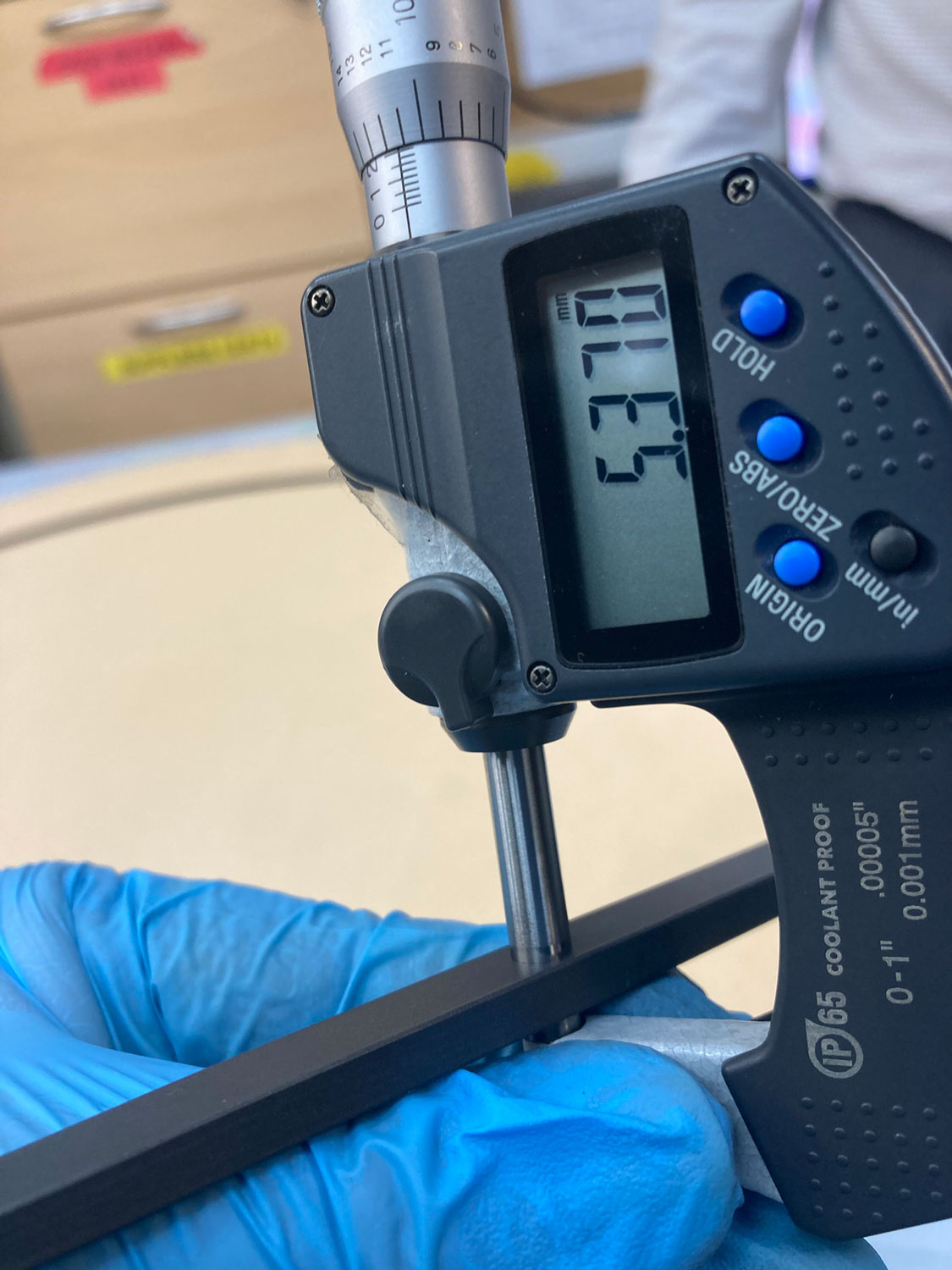
One persistent challenge remained: inconsistent measurement of the gap. PTFE is highly sensitive to temperature, and when components are over a metre in diameter, even minor deviations can skew results. With the customer’s trust on the line, ERIKS needed a way to eliminate doubt.
At the Barnsley gasket facility, ERIKS engineered a bespoke inspection solution: five precision discs, each machined to the exact same reference diameter and finish. These were distributed to all parties, including the manufacturer, ERIKS’ inspection teams, and customer representatives as far away as China.
Every inspection would now be taken from the same reference point, under the same conditions.
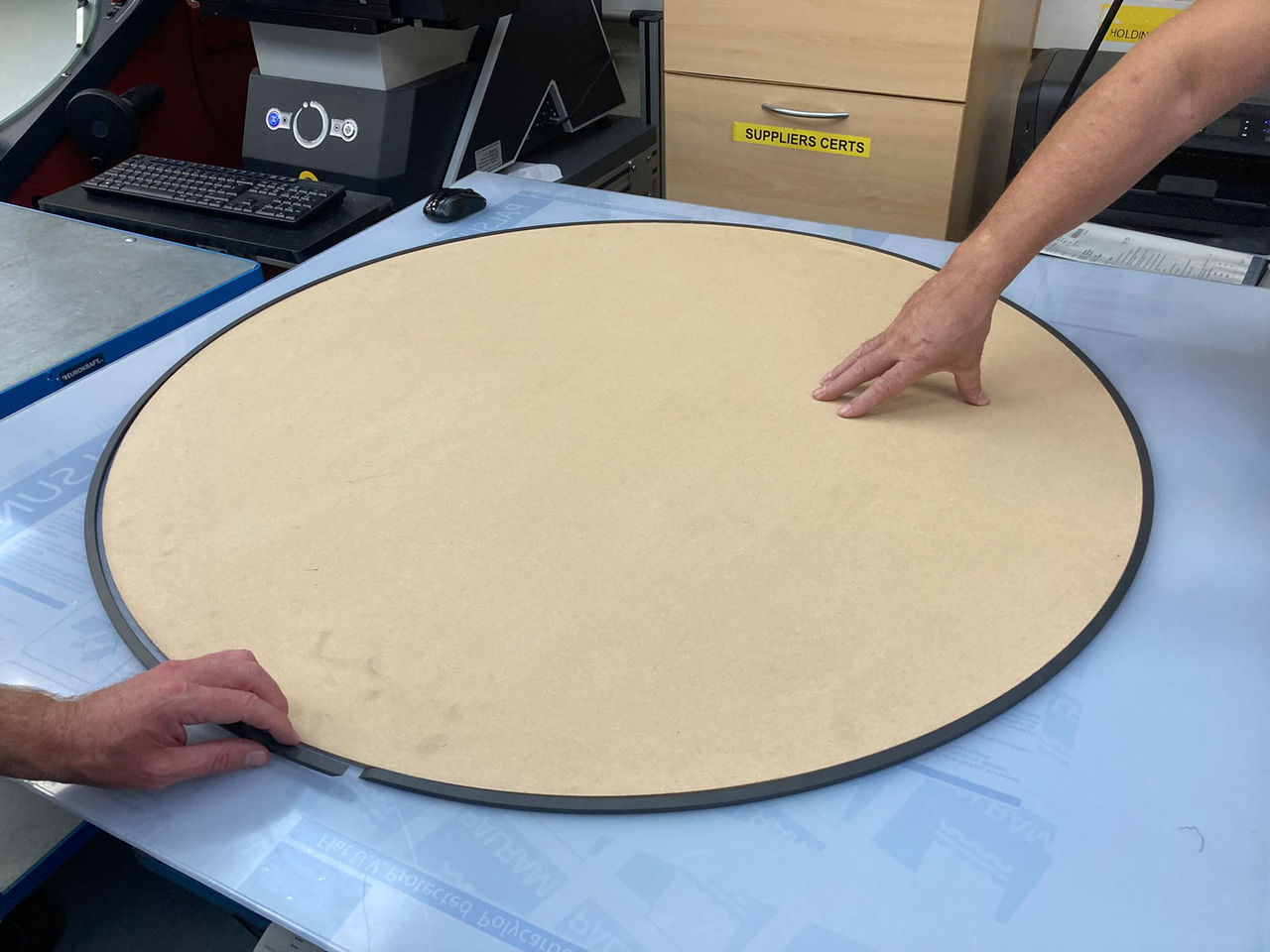
No ambiguity. No misalignment. No hidden variables.
Assurance Delivered
The first production batch of five rings underwent dual-stage inspection. A third-party inspector approved by the customer verified every critical dimension at the supplier’s site.
ERIKS carried out a second inspection at Warrington’s Sealing & Polymer Quality Control Centre, producing full reports and material certification.
To strengthen confidence, ERIKS supplied the first batch free of charge; payment was only required if all parts passed. They did, without a single dimensional non-conformance.
The rings shipped to China, installed without issue, and have since performed flawlessly in subsea operation. The customer has continued ordering through the new supply chain, and consistency across larger volumes has remained exceptionally strong.
Engineering, Collaboration, and Control
This wasn’t just a sourcing exercise. It was a full technical recovery: understanding the problem, regaining control of the supply chain, redesigning the inspection process, and restoring trust in a critical sealing component that sits at the heart of subsea wellhead reliability.
By combining engineering insight with agile decision-making, ERIKS helped the customer avoid immediate scrap costs, eliminate further downtime risk, and sidestep the far greater consequence of a halted installation schedule.
In the world of subsea operations, success often hinges on precision measured in millimetres – but the impact can be counted in millions. Here, engineering know-how made all the difference.
For more information on Sealing and Polymer and to get in touch with one of our ERIKS specislists, please contact your local ERIKS Service Centre, who will be happy to discuss your options.
#SealingAndPolymer #OilAndGas #PTFE #SupplyChain #QualityControl
Author